
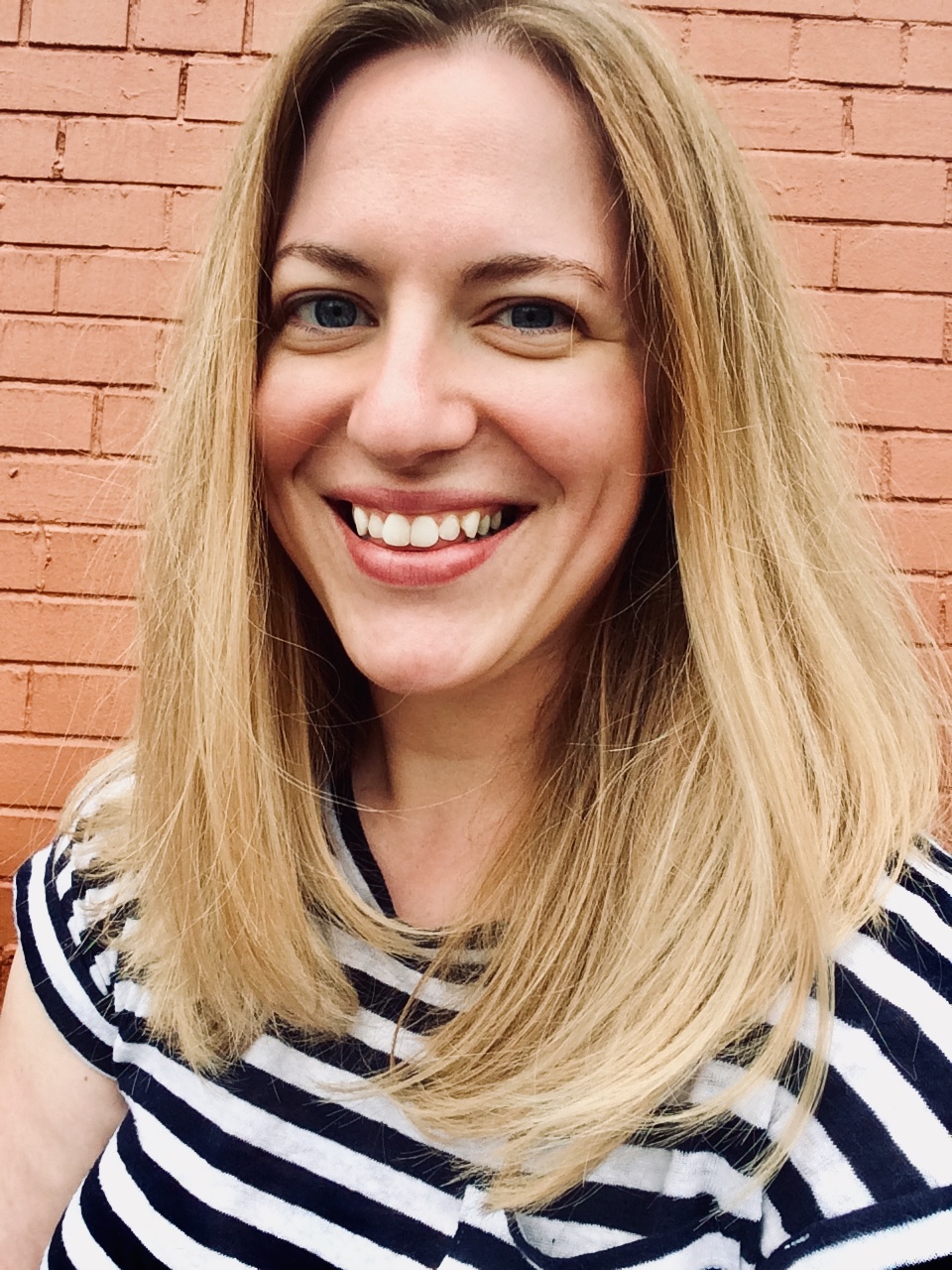
 I am a scholar, educator, and practitioner. My research broadly considers the relation of performance histories to practices of racial violence and white supremacy in the United States, with a focus on the intersection of race, embodiment, and movement-based performance. I received my PhD from the University of Pittsburgh’s Department of Theatre Arts and my MA from the University at Buffalo’s English Department. I am also a graduate of St. Olaf College. From 2014-2015 I was the Interdisciplinary Arts Coordinator at Vassar College, directing a grant – Creative Arts Across Disciplines – from the Andrew W. Mellon Foundation. Currently I am an Associate Professor of Dance Studies in the Department of Theatre & Dance at the University at Buffalo .
My first book Democracy Moving: Bill T. Jones, Contemporary American Performance, and the Racial Past (University of Michigan Press, January 2022) is a history of twenty-first century US American performance that analyzes the choreography of Bill T. Jones as public intellectual labor, Black aesthetic praxis, and historical knowledge. Democracy Moving indexes the potentialities of the moving body and of the kinesthetic as interventions into political ideologies, tracking the ways that democratic social and aesthetic formations might or might not move us towards just and equitable collectivities. Through an intertwined materialist and formalist approach, Democracy Moving demonstrates how aesthetic formations and questions of how and why we remember the past interanimate one another through the meaning-making work of movement.
I am at work on my second monograph, Reparative Encounters: Institutions, the Arts, and the Afterlives of Dispossession. This project illuminates how the arts are used to consolidate power and maintain investments in whiteness as part of US institutions’ identities, as well as the ways that aesthetic projects by Black and Native artists offer counter-methods of flourishing, survivance, and liberation. This book analyzes how and why institutions produce and present Black and Indigenous art that responds to their historical entwinement with racialized dispossession, specifically enslavement and settler colonialism in the US. In order to fully understand these efforts, I argue that we need to conceptualize of institutions, art-making, and reparations as intersecting world-making projects, wherein what might commonly be categorized as symbolic reparations (memorials, paintings, sculptures, etc.) are, in fact, integral to what Olúfẹ́mi Táíwò has theorized as the constructive model of reparations, the building of more just societies. Artists are precisely the interlocutors needed: public intellectuals whose ideas-in-practice model alternatives to current cultural and political hegemonic formations. Reparative Encounters integrates intellectual and cultural history by refusing hierarchical distinctions between ideas and practices in order to model a formalist analysis that is simultaneously invested in the materialities that animate form. Through this approach, this book participates in a shared project among artists, activists, and scholars of de-hierarchizing our institutions, practices, and relations.
In support of my second book, I was a selected participant in the Andrew W. Mellon Foundation-funded Sawyer Seminar “Race and Public History” at the University of Virginia from 2022-2023. Prior, I was a 2021-2022 Dance Research Fellow at the New York Public Library for the Performing Arts. In fall 2019 I was a Humanities Institute Fellow at the University at Buffalo in support of the completion of Democracy Moving. My research has been recognized with the Gerald Kahan Scholar’s Prize from the American Society for Theatre Research, the Vera Mowry Roberts Award from the American Theatre and Drama Society, and, most recently, the Robert A. Schanke Theatre Research Award from the Mid-America Theatre Conference. I am the current coeditor of Theatre Journal. I am also a choreographer and dramaturg.
 Ariel Nereson